
Jason, Coming of Age
Play Jason, Coming of Age
Jason, Coming of Age Screenshots


















Jason, Coming of Age review
Explore choices, relationships, and consequences in this narrative-driven experience
Jason, Coming of Age is a choice-driven narrative experience that follows a 25-year-old protagonist navigating the complexities of adulthood, relationships, and personal growth. This immersive visual novel emphasizes decision-making, where every choice shapes character dynamics, unlocks different story paths, and influences multiple endings. The game blends mature themes with meaningful gameplay mechanics, creating a compelling journey filled with emotional conflict and consequences. Whether you’re interested in understanding the core mechanics, exploring character relationships, or discovering what makes this title unique in its genre, this guide provides everything you need to know about the experience.
Understanding the Core Gameplay Experience
Let me tell you a story about the first time I truly understood what Jason, Coming of Age was all about. I was about an hour into my first playthrough, and Jason was faced with a seemingly simple choice: cover for a friend who had messed up, or tell the truth to an adult. I chose to cover, thinking I was being a loyal buddy. 🫂 Fast forward three in-game months, and that same friend, emboldened by getting away with it, pulled Jason into a much bigger, riskier scheme that completely derailed my planned story path. My jaw dropped. That’s the moment the game’s core promise—that your choice-based visual novel decisions have weight—clicked into place. This isn’t just a story you watch; it’s a life you navigate, with every turn echoing into the future.
At its heart, the Jason Coming of Age gameplay mechanics are elegantly simple yet profoundly deep. You read, you click, you choose. But layered atop that basic visual novel framework is a sophisticated consequence-based gameplay system that tracks everything from your moral compass to which classmates you’ve glanced at in the hallway. The game masterfully blends traditional storytelling with interactive elements, making you an active participant in Jason’s journey of self-discovery. Your controller isn’t just for movement; it’s for shaping a personality, forging bonds, and determining fate.
How Choice-Based Mechanics Shape Your Story
Forget binary “good vs. evil” sliders. Jason, Coming of Age operates on a far more nuanced and human level. The narrative-driven game choices matter not because they give you “Paragon” or “Renegade” points, but because they quietly define who Jason is becoming in the eyes of his world. 🧭 A choice isn’t just about the immediate outcome; it’s about cementing a reputation, setting a precedent, and subtly altering the narrative landscape.
The game presents decisions in various forms:
* Dialog Choices: What you say, from supportive whispers to harsh truths, directly opens or closes avenues of communication with other characters.
* Action Prompts: These are the big, often silent, moments. Do you intervene in a fight? Do you take a risky dare to fit in? Do you sneak out after curfew? These actions speak louder than words.
* Internal Monologue: Sometimes, the most important choice is what Jason thinks. The game lets you steer his internal reactions, which can influence his attitude in future interactions.
The brilliance of the Jason Coming of Age gameplay mechanics lies in their subtlety. You won’t always see a giant “THIS WILL HAVE CONSEQUENCES” warning. Instead, the repercussions feel organic. A flippant remark you made in Chapter 2 might be thrown back in your face during a heated argument in Chapter 6. A kindness shown to an overlooked character might bring you an unexpected ally when you need one most. This creates an incredibly immersive coming of age game story paths, where you’re not just picking plot twists, you’re living a coherent, cause-and-effect life.
To illustrate how early ripples create later waves, here’s a look at how some foundational choices can branch your experience:
| Early Game Choice (Chapter 1-2) | Immediate Impact | Long-Term Narrative Branch & Relationship Effect |
|---|---|---|
| Standing up to a bully targeting a quieter student. | Gain immediate respect from the victim; bully becomes hostile. | Unlocks a deeper friendship path with the quieter student, who may share crucial information later. The bully may orchestrate social trouble mid-game, creating a specific conflict thread. |
| Prioritizing a school project over attending a popular party. | Mild social exclusion; praise from a teacher. | Leads to academic opportunity storylines (e.g., a scholarship subplot). Can cause friction with a friend who values social status, potentially requiring reconciliation later. |
| Sharing a secret you were asked to keep. | Temporary trust from the person you told; betrayal from the secret-keeper. | Permanently alters your relationship with the secret-keeper, locking out their personal questline. The shared secret may become public knowledge, changing how multiple characters interact with you. |
Character Development and Relationship Dynamics
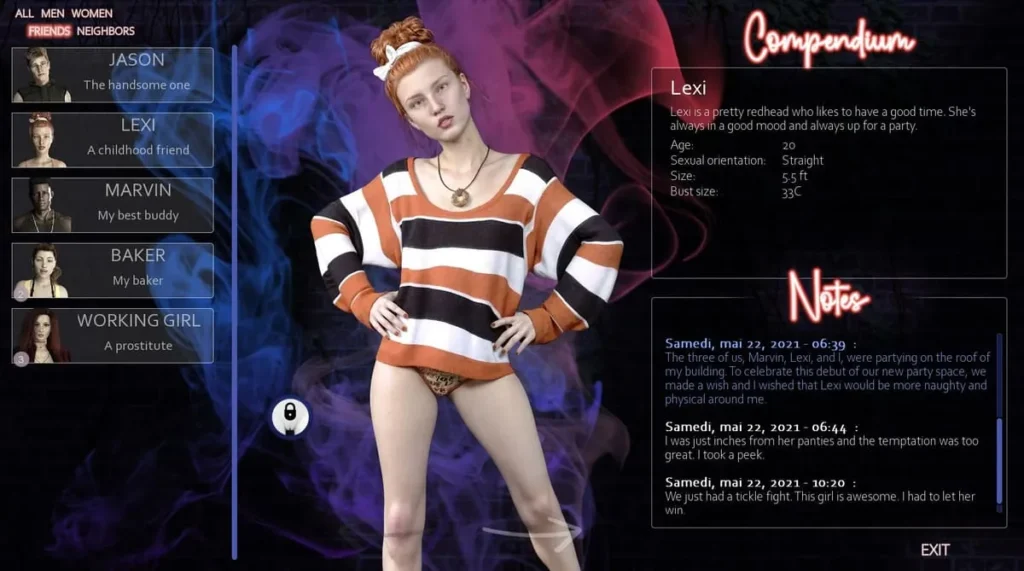
Jason doesn’t exist in a vacuum. His world is populated by a cast of incredibly well-drawn characters, each with their own fears, desires, and evolving lives. The character relationship system is the vibrant, beating heart of this experience. 💖 This isn’t a simple “like/dislike” meter. Your relationships are multidimensional, tracking variables like trust, respect, romance, envy, and indebtedness.
Every interaction is a brick in the foundation of your relationship with that person. Listen patiently to someone’s anxiety? You build trust. Consistently choose your own goals over helping them? You breed resentment. The game visualizes this through subtle cues—changes in their character portrait’s expression, the tone of their text, and the options available when you speak to them. A close friend will offer you unique, supportive dialog choices in a crisis, while a strained relationship might leave you with only cold, formal responses.
This system creates powerful narrative-driven game choices matter moments. Do you pursue a romantic link with one character, knowing it will strain your bond with their best friend? Do you side with a family member in an argument, potentially alienating another? The game forces you to weigh your desires against the health of your social web, mirroring the painful and beautiful complexities of real human connection. Navigating these dynamics is the gameplay, and it’s where Jason’s—and your own—emotional growth is tested and realized.
Multiple Endings and Replay Value
With so many variables in play, it’s no surprise that Jason, Coming of Age boasts a rich tapestry of conclusions. The multiple endings visual novel aspect isn’t just about a final choice; it’s the culmination of hundreds of decisions made across the entire story. Your ending is a reflection of the person Jason became, the relationships he nurtured or burned, and the values he ultimately prioritized. 🌄
Endings are categorized along several key axes, determined by your invisible “stat” sheet the game has been compiling:
* Personal Resolution: Does Jason end up confident and self-assured, or anxious and uncertain? This is based on your choices regarding his personal challenges and self-talk.
* Social Standing: Is he surrounded by a close-knit group, in a devoted partnership, isolated, or famously popular? This is a direct product of the character relationship system.
* Future Path: Does the story hint at a future in art, academics, travel, or something else? This ties back to which story paths and opportunities you pursued.
What determines your ending? Everything. The game uses a hidden point system for key relationships and core personality traits. The final chapter assesses these scores and presents you with an ending that feels uniquely, and sometimes heartbreakingly, yours. Did you neglect a friendship for months? Don’t expect them to show up for your pivotal moment. Did you consistently choose bravery over safety? Your ending will reflect that bold trajectory.
This architecture makes the replay value immense. 🎮 A second playthrough isn’t about skipping text; it’s about exploring a parallel life. You’ll discover:
* Entirely New Scenes: Characters you previously ignored have full, rich subplots. Choices you never considered unlock new locations and events.
* Altered Perspectives: Knowing a character’s secret from a past playthrough changes the meaning of all your interactions with them.
* Different Emotional Beats: The story’s pivotal moments hit differently when you arrive there with a different Jason—a loner, a social butterfly, a cynic, or a dreamer.
The magic is that no single playthrough shows you the “whole” game. The true scope of the coming of age game story paths is only visible across multiple attempts, each one a valid and poignant version of Jason’s journey to adulthood.
My Personal Insight: On my third playthrough, I decided to make Jason a people-pleaser, always saying what he thought others wanted to hear. The ending I got was perhaps the saddest—a Jason who was well-liked but felt utterly unknown, even to himself. It was a powerful lesson about the cost of inauthenticity, one I only learned by actively exploring the consequence-based gameplay system.
FAQ: Your Choices and Their Weight
Do choices from the very beginning really affect the very end?
Absolutely. The game has a long memory. Major narrative forks are often rooted in decisions made in the first few chapters, like which social group you initially gravitate toward or how you handle a foundational family conflict. Think of it as planting seeds in chapter one and harvesting the tree in chapter ten.
Can I backtrack if I make a choice I regret?
The game autosaves at key decision points and does not have a traditional “scene selection” feature for this reason. It wants you to live with your decisions, much like in real life. However, you can manually save frequently if you wish to create your own backup points.
How does the game show me that a relationship has changed?
Pay close attention to dialogue and scenes. A deteriorating relationship will result in shorter, colder responses, fewer interaction prompts, and the character excluding you from events. An improving one will open up new, personal conversation topics and they will seek you out for help or companionship.
Are there any “game over” bad endings?
There are endings that are emotionally negative or bittersweet, but they are always complete, narrative conclusions. The game doesn’t “punish” you with a failure screen; it shows you the realistic, sometimes difficult, outcome of a particular life path.
What’s the best way to experience all the content?
Embrace the roleplay. On your first run, play instinctively. For subsequent playthroughs, define a specific archetype for Jason (the Joker, the Rebel, the Peacemaker, the Ambitious One) and stick to choices that align with that personality. You’ll be amazed at how differently the story unfolds.
Ultimately, the Jason Coming of Age gameplay mechanics succeed because they fade into the background, leaving you not with the feeling of manipulating a game, but of living a life. Your choice-based visual novel decisions become second nature, your management of the character relationship system feels like genuine social navigation, and the pursuit of different multiple endings visual novel outcomes becomes a personal exploration of identity. It’s a profound reminder that in life, as in this remarkable game, we are the sum of our choices.
Jason, Coming of Age delivers a compelling narrative experience centered on meaningful choices and character relationships. The game’s strength lies in its choice-based mechanics that genuinely impact story outcomes, creating multiple paths and endings that reward different playstyles and decisions. Through its exploration of emotional conflict, personal growth, and the complexities of adulthood, the title offers players a chance to shape their own coming-of-age journey. Whether you’re drawn to narrative-driven experiences, relationship-focused gameplay, or stories that emphasize consequence and choice, this game provides a substantial and engaging experience. If you’re considering diving into this title, understanding the mechanics and character dynamics will help you make the most of your playthrough and discover the ending that resonates with your choices.