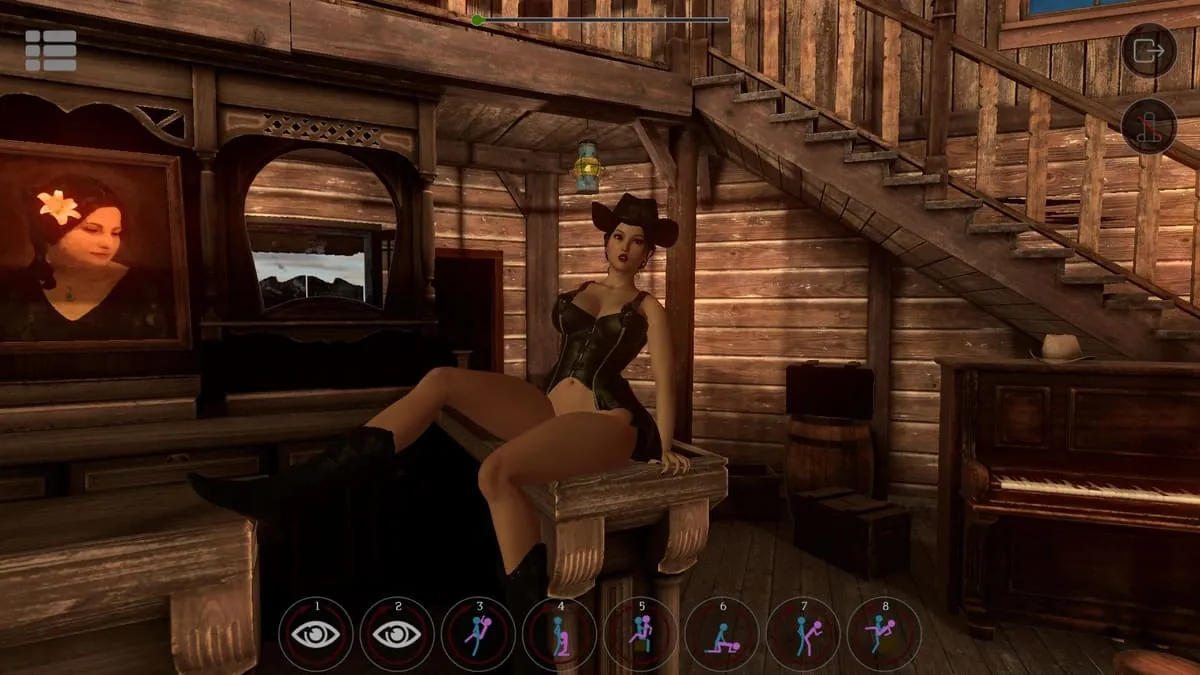
Dezyred
Play Dezyred
Dezyred Screenshots






Dezyred review
Master the immersive 8K virtual reality gaming platform with our in-depth review and gameplay strategies
Dezyred represents a revolutionary shift in interactive virtual reality entertainment, combining cutting-edge 8K visuals with player-driven narratives that respond to your choices. Unlike traditional passive viewing experiences, this platform puts you in complete control, allowing you to shape scenes, influence character relationships, and unlock multiple story paths through your decisions. Whether you’re curious about the innovative gameplay mechanics, device compatibility, or the extensive content library featuring top performers, this comprehensive guide covers everything you need to know about what makes Dezyred a standout in the interactive entertainment landscape.
Understanding Dezyred’s Revolutionary Gameplay System
Let’s be honest for a second. How many times have you put on a VR headset, been wowed by the visuals for about ten minutes, and then realized you’re just on a glorified rollercoaster? 🎢 You look around, but you can’t really touch anything. You meet characters, but they spout the same lines every time. Your choices, if you even get any, boil down to “yes” or “no,” with zero long-term impact. It feels more like watching a very expensive movie you’re stuck inside.
That was my exact experience—until I booted up Dezyred. This isn’t just another VR title; it’s a paradigm shift. The entire philosophy is built around one core principle: player agency interactive experience. What does that mean in practice? It means the game world doesn’t just react to you; it evolves with you, remembers you, and is fundamentally shaped by your personality. Forget passive viewing; this is about active co-authorship. Today, we’re diving deep into the mechanics that make this possible, exploring the Dezyred interactive gameplay that has redefined my expectations for virtual reality.
How the Interactive Choice Engine Works
At the heart of Dezyred lies its sophisticated choice engine VR game system. This isn’t your typical dialogue wheel with a “good,” “bad,” and “sarcastic” option. Think of it as the game’s central nervous system, a complex web of cause and effect that tracks everything from your tone of voice to the order in which you perform actions.
I learned this the hard way. In an early scene, I was trying to get information from a character named Leo. A traditional game might have given me a direct “Ask about the secret” option. In Dezyred, I had to build toward that moment. I chose to first compliment his work (building Rapport), then casually mention a related event I’d overheard (testing his reaction with my Insight skill), and finally pose my question as a shared concern. The game’s engine evaluated all those layered inputs—my skill levels, my previous interactions with Leo, even the ambient mood I’d set for the scene—to generate his response. He trusted me and opened up. When I replayed the scene and just demanded answers, he clammed up immediately, and that door stayed shut for the rest of my playthrough.
This is the magic of branching narrative gameplay powered by true agency. Choices are rarely binary. They are nuanced, situational, and have weighted consequences. The engine doesn’t just ask, “What did the player say?” It asks, “How did they say it? What have they done before? What is their current state?” This creates a stunningly organic feel. You’re not picking from a script; you’re using the tools the game gives you—your words, your actions, your presence—to genuinely interact.
💡 Pro Tip: Don’t rush through conversations. The choice engine VR game in Dezyred often presents opportunities for environmental interaction mid-dialogue. Picking up an object or changing your position can unlock entirely new dialogue branches that wouldn’t exist otherwise.
To really crystallize how Dezyred’s approach differs from what’s come before, let’s look at a direct comparison.
| Feature | Traditional VR Content | Dezyred Interactive Gameplay |
|---|---|---|
| Player Agency | Limited; often illusion of choice with single-path outcomes. | **Paramount**; choices are meaningful, layered, and directly shape the world and narrative. |
| Interaction Depth | Surface-level; focused on object physics or simple triggers. | **Systemic**; interactions are tied to character memory, stat checks, and narrative logic. |
| Narrative Consequence | Minimal; story resets or slightly altered cutscenes. | **Long-term & cascading**; early decisions can radically alter mid and end-game scenarios. |
| Replay Incentive | Low; often just to experience superior graphics again. | **Exceptionally High**; new character dynamics, story paths, and outcomes emerge with different play styles. |
Character Relationships and Consequence Systems
This is where Dezyred interactive gameplay truly becomes personal. Every significant character has a dynamic relationship meter system, but to call it a simple “like/dislike” bar would be a massive understatement. These are multi-dimensional profiles that track respect, trust, affection, rivalry, and even resentment on independent axes.
Let me give you a case study from my playthrough. There’s a character, Elara, who values honesty and competence. Early on, I bragged (using a high Persuasion check) to quickly solve a problem she was struggling with. The meter showed a spike in “Respect” but a dip in “Affection”—she saw me as capable, but arrogant. Later, I had the chance to admit I got a bit lucky on that solution. This humble action didn’t just boost Affection; it created a unique story flag: “Elara_Values_Humility.” From that point forward, dialogue options involving vulnerability or shared doubt with her became available, unlocking a whole side of her character I wouldn’t have seen otherwise. This is player agency interactive experience in its purest form.
Characters remember. They hold grudges, develop affections, and change their behavior based on a complex history of interactions. If you consistently interrupt someone, they may become terse or avoid conversations with you altogether. If you support their goals, they might seek you out for help or share crucial secrets. The branching narrative gameplay here is woven directly from the fabric of these relationships. Your standing with one character can influence how another perceives you, as they talk to each other off-screen. The game’s intimate moments flow naturally from this system; they are narrative crescendos built on earned connection, not predetermined plot points. They feel meaningful because the game’s systems have rigorously proven the connection exists.
🧠 My Insight: Pay attention to character-specific tells. One character might fidget with their sleeve when they’re lying, another might avoid eye contact when they’re emotionally vulnerable. Spotting these, often tied to your Insight skill, can give you the key to navigating the relationship meter system perfectly.
Supporting this deep social simulation are the brilliant stat progression mechanics. This isn’t about grinding to increase a number. Your stats—like Persuasion, Insight, Resolve, Empathy, and Creativity—improve organically based on your in-game choices and successes.
- Persuasion goes up when you successfully negotiate or inspire.
- Insight levels when you correctly read a situation or character’s motive.
- Resolve strengthens when you stand your ground under pressure.
It’s a brilliant feedback loop. Your natural playstyle enhances the very skills that facilitate that style, which in turn opens up new, more sophisticated avenues for player agency interactive experience. In one playthrough where I focused on empathetic, supportive choices, my Empathy stat soared. This unlocked gentle, non-confrontational solutions to conflicts that simply weren’t visible on my more assertive, Persuasion-focused run. The game wasn’t just respecting my choices; it was rewarding my consistent personality by deepening the ways I could express it.
Customization Features That Set It Apart
If the choice engine and relationship systems are the brain and heart of Dezyred, then the customizable scenes VR features are its soul—your personal creative canvas. This goes far beyond changing a character’s outfit (though you can do that, too!). You have direct control over the narrative atmosphere, aesthetic, and even subtle story elements.
The best way to illustrate this is with a concrete example. Let’s take the serene “Evening Garden” scene. On my first playthrough, I left everything at default for a crucial conversation with Leo. It was tense, professional, and ultimately led to a transactional alliance.
For my second run, I decided to experiment with the customizable scenes VR tools before the same conversation:
* Atmosphere: I changed the weather from “Clear Night” to “Soft Rain” and added the “Crackling Firepit” ambient sound. The mood instantly became more intimate and reflective.
* Character Outfits: I switched Leo from his formal jacket to a casual sweater, signaling a shift away from his professional persona.
* Narrative Elements: I used the “Shared Memory” injector to pre-load a positive past event we’d experienced together.
The result was astonishing. The entire tenor of the scene changed. Our conversation was softer, more personal. The choice engine VR game, processing this new contextual data, presented options centered on vulnerability and shared history instead of politics and strategy. This single customization led him to share a personal secret, which spawned an entirely new side quest chain. The branching narrative gameplay wasn’t just in my dialogue choices; it was initiated by my curatorial choices before a word was even spoken.
This level of customization empowers you to become the director of your own experience. Are you in the mood for a light-hearted, romantic comedy? Adjust the lighting, character attire, and music accordingly, and the game’s systems will lean into those tones. Want a dark, noir-inspired mystery? You can set the stage for that, too. This massively amplifies the replay value, as you’re not just making different story decisions—you’re crafting entirely different genres of interaction within the same foundational narrative.
The Dezyred interactive gameplay philosophy comes full circle here. The customization isn’t just cosmetic; it’s a functional, narrative-driven tool. Changing a scene’s atmosphere can affect character moods, which influences the success probability of certain stat checks (e.g., it’s easier to console someone in a calm, private setting). Your ability to tailor the world is yet another form of player agency interactive experience, giving you unprecedented control to shape not just what happens, but how it feels when it happens.
Ultimately, Dezyred is more than a game; it’s a platform for meaningful interaction and story generation. Its revolutionary blend of a nuanced choice engine VR game, dynamic relationship meter system, organic stat progression mechanics, and profound customizable scenes VR tools creates a player agency interactive experience that is currently unparalleled. It trusts you with its world and rewards you with a deeply personal, infinitely replayable branching narrative gameplay journey. Your story isn’t waiting to be told; it’s waiting to be built, one deliberate, impactful choice at a time.
Dezyred stands as a pioneering interactive VR platform that fundamentally transforms how players engage with immersive entertainment. By combining stunning 8K visuals, sophisticated choice mechanics, and real performer performances, it delivers an experience where your decisions genuinely matter and shape the narrative. The platform’s strength lies in its exceptional replay value, extensive customization options, and the seamless integration of player agency throughout every scene. Whether you’re drawn to the innovative gameplay systems, the diverse content library, or the technical excellence of the visual presentation, Dezyred offers something distinctly different from traditional passive entertainment. Start your journey today by registering for free and discovering how your choices create a uniquely personal experience in this groundbreaking interactive virtual reality world.