
Tropicali
Play Tropicali
Tropicali Screenshots













Tropicali review
Explore the interactive mechanics, story choices, and management systems in this tropical adventure
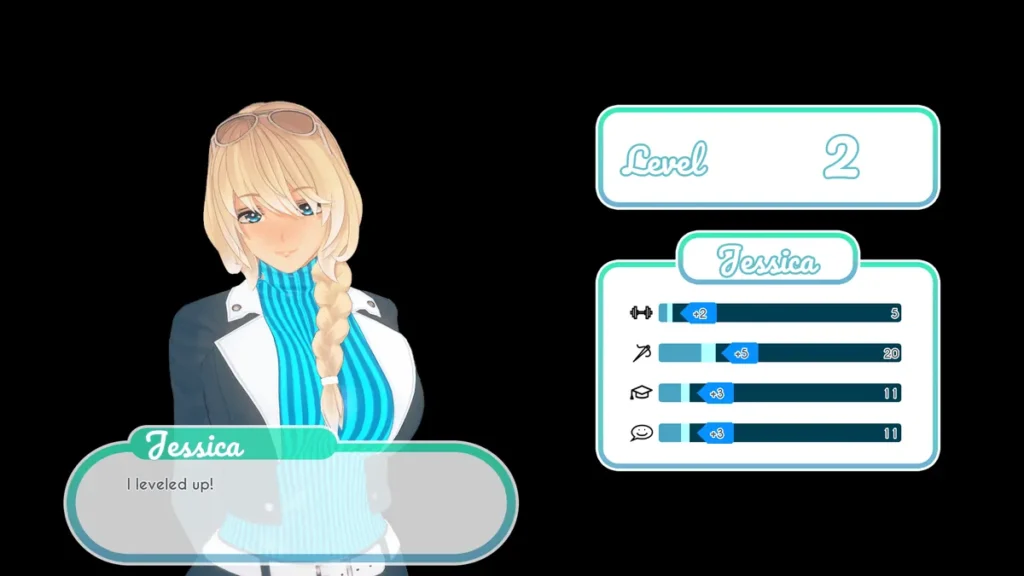
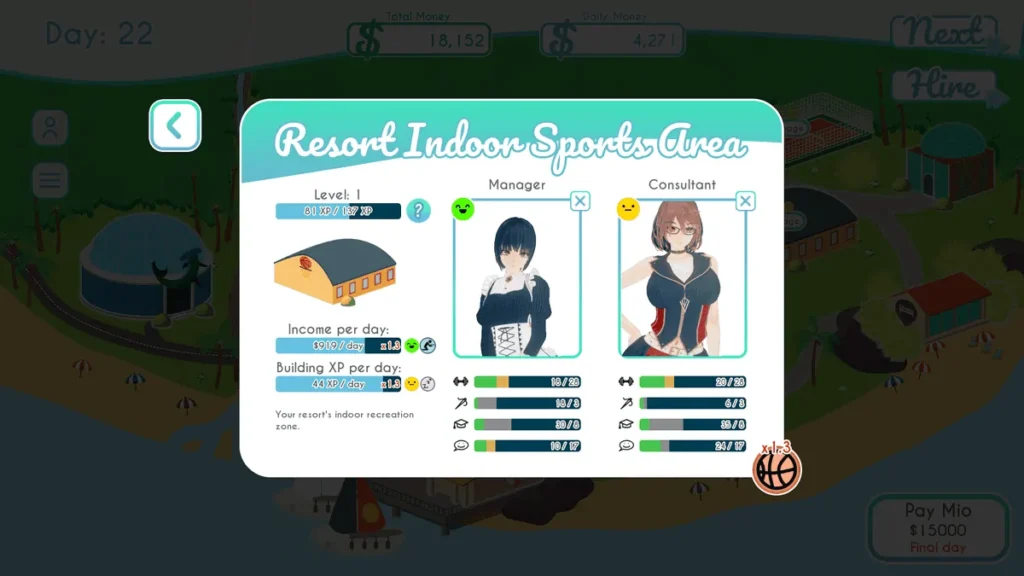
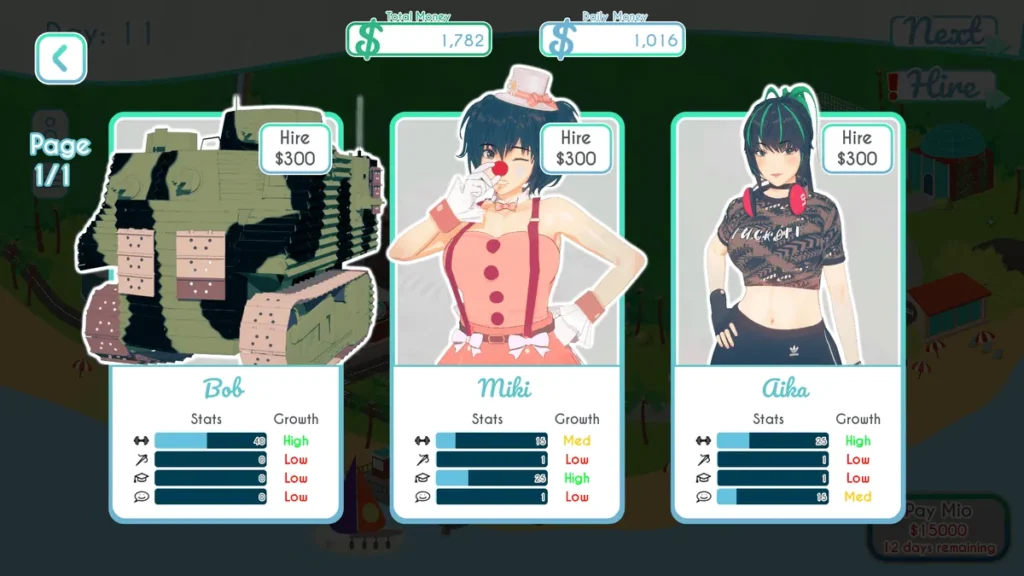
Tropicali is an adult-oriented point-and-click adventure game that combines classic exploration mechanics with interactive storytelling and resort management gameplay. Developed by Story Anon, this title has gained attention for its blend of puzzle-solving, dialogue choices, and narrative branching that directly impacts character relationships and story outcomes. Whether you’re interested in understanding the core mechanics, exploring how choices shape your experience, or learning about the game’s unique systems, this guide covers everything you need to know about what makes Tropicali a distinctive entry in interactive fiction gaming.
Core Gameplay Mechanics: How Tropicali Structures Interactive Experience
Alright, let’s get into the heart of what makes Tropicali tick. 🎮 You know that feeling when you start a new game and you’re just…lost? Not in a bad way, but in that wonderful, “where do I even begin?” kind of way? That’s Tropicali from the moment you wash ashore. Its magic isn’t in one single feature, but in how everything—exploring, talking, problem-solving—is woven together into one seamless, sticky web of cause and effect. This chapter breaks down the core Tropicali gameplay mechanics that build this interactive experience. We’re talking about the foundational systems that turn a simple island setting into a living, breathing world that reacts to you.
Point-and-Click Adventure Foundation and Exploration Systems
At its heart, Tropicali is a love letter to classic point-and-click adventure game design, but with a modern, fluid twist. Forget clunky movement; here, you navigate by clicking on beautifully rendered, pre-rendered backgrounds that make every screen feel like a postcard you can step into. 🌴 The island is your oyster, but it’s an oyster that hides its pearls very, very well.
The exploration is built on two key principles: interconnected environments and hidden interactive hotspots. The island isn’t a linear path. The dense jungle might connect to a crumbling temple, which has a back entrance to a hidden cove. Early on, you’ll see paths blocked by thick vines or rivers too deep to cross—these aren’t just set dressing, they’re future puzzle solutions waiting for the right tool or the right piece of knowledge gained from another character. This design encourages backtracking, but never feels tedious because your reason for revisiting a location is always evolving. Maybe you just found a machete, or perhaps a new character mentioned a secret about a place you’ve already been.
The real joy comes from the pixel-hunt… but a good one. Cursor changes are subtle, and hotspots aren’t always obvious. Is that just a pretty cluster of rocks, or can you interact with it? I remember spending a good ten minutes staring at the waterfall, convinced there was something behind it. It wasn’t until I combined a conversation with the wary botanist, Mateo, with a rusty climbing hook I’d found days earlier that the game let me discover its secret. This is the core exploration loop: see, investigate, remember, and return. It directly feeds the choice-based progression, as the areas you can access and the resources you find dictate which character storylines you can advance and which survival challenges you can overcome.
Inventory Management and Puzzle-Solving Mechanics
This is where your brain goes from “ooh, pretty” to “aha!”. 🧩 The inventory puzzle solving in Tropicali is less about abstract logic puzzles and more about practical, grounded survival and social ingenuity. Your inventory is a collection of the island’s offerings: a snapped fishing rod, a handful of rare herbs, a waterlogged journal, a shiny shell.
The system brilliantly avoids the old “use rubber chicken on pulley” trope. Instead, puzzles feel organic. You don’t just use Item A on Hotspot B. You often need to combine items in your inventory first, or use an item to alter the environment in a way that reveals a new hotspot. For example, to get fresh water early on, you might need to: 1) Find a hollowed coconut shell (inventory item), 2) Use it on a tarpaulin torn from your wrecked boat (environment hotspot) to create a “rain catcher” (new combined inventory item), 3) Then place the rain catcher in a specific, sunny clearing you discovered earlier. It’s a multi-step process that makes you feel like a true island MacGyver.
These puzzles are the physical manifestation of the character relationship system. That broken fishing rod? The gruff fisherman, Kaito, might fix it for you… but only if you’ve helped him by finding his lost lucky charm first. The charm might be stuck in a log you can only move with a lever, which the engineer, Anya, can teach you to make. Suddenly, solving a simple “get food” puzzle requires you to navigate social favors and prove your worth. Failure has consequences too. If you’re careless and use a precious medicinal herb in a failed puzzle attempt, the character who needed it for their storyline might fall ill, locking you out of their questline until you find a rare replacement. Your management of resources is a constant, tangible reflection of your priorities and alliances.
Dialogue Trees and Choice-Based Progression
If exploration is the body and puzzles are the hands of Tropicali, then the dialogue system is its beating heart and cunning brain. ❤️🧠 This is where the game truly shines and separates itself from being just a pretty adventure. We’re not talking about simple yes/no questions here. We’re diving deep into branching conversation trees with real teeth.
Every major conversation presents you with interactive dialogue choices that go beyond basic information gathering. You’re choosing your tone, your personality on the island. The game often presents you with three distinct emotional vectors:
- Helpful/Cooperative: “Let’s figure this out together.”
- Flirtatious/Charming: “We make a pretty good team, you and I.”
- Sarcastic/Dismissive: “Sure, because this plan worked so well last time.”
These aren’t just cosmetic. They are the primary drivers of the character relationship system. Each character has hidden affinity meters for these different attitudes. Being consistently helpful with the pragmatic Anya builds trust. A well-timed flirtatious line with the romantic poet, Leo, might open up a vulnerable side of him. But sarcasm with the already-stressed ship’s captain, Mara, could shut down a conversation entirely.
The game masterfully uses timed responses in tense scenes to amplify this. You have a few seconds to decide—do you comfort a frightened character, or demand answers? That split-second choice can create a permanent ripple. I learned this the hard way. Early on, I confronted a character about a lie with aggressive, accusatory tones. The game didn’t tell me “Character X will remember this.” It just… happened. Later, when I needed their help for a crucial task, they refused, citing my earlier hostility. The only way to mend the fence was to complete a major, unrelated task to prove my trustworthiness—a several-hour detour based on one careless dialogue pick!
This architecture is what creates immense replay value. On your second playthrough, you can approach Leo as a sarcastic rival instead of a love interest, leading to entirely different story beats, conflicts, and even unique puzzles he might set up to compete with you. The choice-based progression means no two stories are identical.
To see how these dialogue mechanics manifest, let’s look at a concrete example and how the game’s systems compare:
A Story in Three Choices: The Stranded Sailor
Early on, you find Finn, a sailor from another wreck, arguing with Mara about resource allocation.
* Path 1 (Helpful/Cooperative): You suggest a fair, organized split of the salvage. Consequence: Mara’s trust in you increases significantly, unlocking her personal quest to rebuild the radio. Finn remains neutral but will later vouch for you in a group decision.
* Path 2 (Flirtatious/Charming): You joke to diffuse the tension, siding vaguely with Finn. Consequence: Finn is immediately endeared to you, offering you a hidden stash of supplies later. Mara is frustrated, delaying the radio quest until you apologize via a specific task (fetching her a rare component).
* Path 3 (Dismissive/Aggressive): You accuse Finn of hoarding. Consequence: Finn becomes a minor antagonist, spreading rumors about you. This locks his friendship path unless you perform a major act of contrition (saving him from a later danger). Mara respects your decisiveness but finds you abrasive.
| Core Mechanic | How it Manifests in Tropicali | Player Agency & Impact |
|---|---|---|
| Exploration & Navigation | Interconnected pre-rendered environments with hidden, context-sensitive hotspots. Areas are gated by item- or knowledge-based puzzles. | Directly controls story pacing and access to characters/resources. Your curiosity (clicking on everything) is systematically rewarded with new avenues for progression. |
| Inventory & Puzzle Solving | Organic, multi-step puzzles requiring item combination and environmental manipulation. Resources are often scarce and tied to character quests. | Your puzzle-solving defines your practical survival capabilities. Resource allocation choices can enable or permanently lock relationship paths and story outcomes. |
| Dialogue & Choice | Tone-based branching conversation trees with timed responses. Choices build hidden affinity meters for each character. | Defines your social identity on the island. Creates permanent narrative branches, character alliances, and unique replay scenarios. This is the soul of choice-based progression. |
The Core Loop: Survival and Thriving
So, how do all these Tropicali gameplay mechanics—point, click, talk, solve—fit together into a satisfying loop? It’s a beautiful dance between immediate survival and long-term connection. 🌅
Your day might start with a basic need: I’m hungry. This prompts exploration (scouring the beach for coconuts). You find one, but it’s high up. Cue inventory puzzle solving (find/make a tool to knock it down). While looking for a long stick, you stumble upon Kaito, who seems upset. You engage in interactive dialogue choices, choosing to be helpful. He mentions his broken net, creating a new survival-adjacent objective. To fix it, you need vines from the jungle, which are guarded by… you get the idea.
Every action feeds into another. Solving a character’s puzzle (fixing the net) grants you a sustainable food source (fish), which frees up your time to explore deeper into the temple for story clues, which impress another character, unlocking their quest. The island is a clockwork of interconnected needs—yours and others’. The character relationship system isn’t a separate “social sim” layer; it’s the essential framework for surviving and, eventually, thriving. You can’t do it alone. Whether you build a community through cooperation, charm your way into favors, or bully others into submission, your chosen style of choice-based progression determines what kind of paradise—or prison—this island becomes for you.
This seamless integration is the true genius of Tropicali’s design. You’re never just “in a dialogue scene” or “solving a puzzle.” You’re always living on the island, where a conversation is a puzzle, and finding a tool is a story beat. It creates an experience that feels less like playing a game and more like authoring your own unique tropical saga, one thoughtful click and one consequential word at a time. ✨
Tropicali stands out as a sophisticated blend of point-and-click adventure gameplay, meaningful dialogue choices, and resort management mechanics. The game’s strength lies in how seamlessly these systems integrate, creating a world where every interaction—from collecting resources to choosing dialogue tone—carries weight and consequence. The branching narrative structure ensures that multiple playthroughs feel genuinely different, as character relationships develop based on accumulated choices rather than predetermined paths. With solid character development, well-executed writing, and a system that rewards both strategic thinking and roleplay experimentation, Tropicali offers a comprehensive interactive experience that appeals to players seeking depth alongside engaging gameplay mechanics.